5 years ago, a trio of researchers from the University of Massachusetts-Dartmouth conducted a scientific study, and discovered a depressing pattern: homes in poorer Massachusetts communities were charged more for flood insurance than homes in wealthier communities. The disparity was even greater for homes in areas deemed to be at higher risk of flooding. The lead researcher, Chad McGuire, told the Boston Globe in advance of the study's publication that the cause of the disparity was unknown to the research team, and theorized that it could be due to wealthier homeowners moving their property further from the water or placing said properties on stilts, using their more expansive fiscal resources. While it is almost certainly the result of greater financial resources, there is at least one probable cause that the research team didn't consider.
The cause that the researchers didn't discuss is, that the home insurance industry structurally exploits lower-class and middle-class homeowners. This exploitation is through As with all instances of systemic exploitation, there are several layers, each reinforcing the others. The first of these layers is how people of different economic classes acquire insurance for their home.
In Boston's high-risk flood areas, homeowners are legally required to buy flood insurance if their home is backed by a mortgage. State law itself doesn't require the purchase of insurance, though throughout the rest of the state, it is standard practice for a mortgage lender to require it. This creates an immediate disparity in who is or is not obligated to buy flood insurance in the first place, based on whether or not people need a mortgage to purchase a property. People who purchase homes without a mortgage typically are wealthier, since wealthier homebuyers are more likely to have the necessary funds to procure a real estate property. The data illustrates this: people are more than twice as likely to buy a vacation house without a mortgage as they are a primary residence and more than 2.5 times as likely to buy an investment house the same way, two types of houses that are only bought by people who can afford to own multiple real estate properties (i.e. rich people).
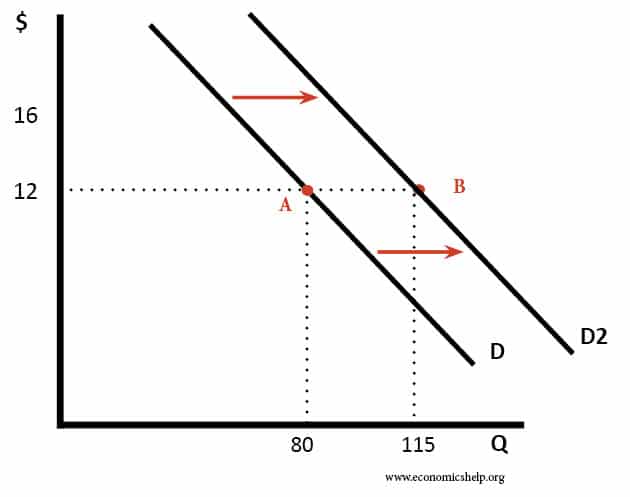
Since banks require home insurance for a loan, and since working-class and middle-class homeowners are more likely to need a mortgage from a bank to buy a house, the subsequent result is that working-class and middle-class families are forced to hold insurance policies on their house because they aren't rich enough to actually have a say in the matter. In market research data, this class-based requirement would be represented as an uptick in consumer demand for insurance policies among working-class and middle-class households (figure 1). It would also be represented as a change in the elasticity of demand from elastic to inelastic (figure 2), i.e. consumer "demand" decreases by less than it otherwise would when insurers raise their rates, since homeowners not wealthy enough to buy homes without a mortgage can't choose to drop home insurance when it gets too expensive unless they want the bank to repossess their house. Fully 47% of the insurance industry is controlled by 10 multibillion-dollar corporations, so one can expect that insurance companies would read the market research data.
News Uncovered is legally required to say that none of this proves definitively that insurance companies are actively engaged in widespread price discrimination based on economic class. To even have the means to engage in price discrimination, insurance companies would need to be legally allowed to hike rates even on customers who don't file claims, have collected data on which insured homes are primary homes, and an itemized list of which homeowners have a mortgage. Also, it would need to be visibly present if researchers studied the topic, like it was in the UMass-Dartmouth study. Until the insurance companies can check off all four of those boxes, any allegations of rampant price discrimination would be inherently baseless.
This article is the first in a series. If you would like to read the rest of the series, sign up to be a member Here!