Radiation Protection II

Sofia Skyttner, MSc
2019

Please, press F11 for full screen!

Who is here today?

National Authority in Radiation Protection

Swedish Radiation Safety Authority

Strålsäkerhetsmyndigheten (SSM)

Strålskyddslagen (2018:396)

Strålskyddsförordning (2018:506)

Föreskrifter (SSM FS 2018-XX)

Strålskyddslagen (2018:396)

1 § Syftet med denna lag är att skydda människors hälsa och miljön mot skadlig verkan av strålning.

2 § Lagen är indelad i följande kapitel:

  • 1 kap. Lagens syfte och innehåll
  • 2 kap. Lagens tillämpningsområde
  • 3 kap. Grundläggande bestämmelser om skydd mot joniserande strålning
  • 4 kap. Arbetstagares exponering för joniserande strålning
  • 5 kap. Allmänhetens och miljöns exponering för joniserande strålning
  • 6 kap. Tillstånd och anmälan i fråga om joniserande strålning
  • 7 kap. Tekniska anordningar som kan alstra icke-joniserande strålning
  • 8 kap. Tillsyn
  • 9 kap. Straff och förverkande
  • 10 kap. Tystnadsplikt, överklagande och avgifter

Strålskyddsförordning (2018:506)

1 kap. Förordningens innehåll
2 kap. Dosgränser
3 kap. Optimering
4 kap. Andra bestämmelser om skydd mot strålning
5 kap. Tillstånd och anmälan
6 kap. Dokumentation, information och samtycke
7 kap. Andra bestämmelser om undantag och dispenser
8 kap. Tillsyn
9 kap. Straff, överklagande och verkställighet

https://www.riksdagen.se/sv/dokument-lagar/dokument/svensk-forfattningssamling/stralskyddsforordning-2018506_sfs-2018-506

Regulations of SSM

  • SSMFS 2018:1 Strålsäkerhetsmyndighetens föreskrifter om grundläggande bestämmelser för tillståndspliktig verksamhet med joniserande strålning
  • SSMFS 2018:2 Strålsäkerhetsmyndighetens föreskrifter om anmälningspliktiga verksamheter
  • SSMFS 2018:5 Strålsäkerhetsmyndighetens föreskrifter och allmänna råd om medicinska exponeringar
  • SSMFS 2018:9 Strålsäkerhetsmyndighetens föreskrifter om godkända persondosimetritjänster
  • SSMFS 2014:4 Strålsäkerhetsmyndighetens föreskrifter och allmänna råd om laser, starka laserpekare och intensivt pulserat ljus

(FS = Föreskrift)

Read more: https://www.stralsakerhetsmyndigheten.se/omraden/stralning-i-varden/foreskrifter/?sort=date

Reports of SSM

  • SSM Report 2009:03 National Survey on justification of CT examinations in Sweden
  • SSM Report 2010:14 Patientdoser från röntgenundersökningar i Sverige (2005-2008)
  • SSM Report 2012:23 Samlad strålsäkerhetsvärdering av hälso- och sjukvård
  • SSM Report 2013:11 Mätmetoder för bestämning av stråldoser till ögats lins

International Organizations in Radiation Protection

UNSCEAR - United Nations Scientific Committee on the Effects of Atomic Radiation
Assess and report on levels and effects of ionizing radiation exposure

IAEA - International Atomic Energy Agency
Safety fundamentals, requirements, guides & practices

ICRP - International Commission on Radiological Protection
Providing recommendations and guidance on all aspects of (ionizing) radiation protection
Publications: http://www.icrp.org/publications.asp

Flag of IAEA.svg
Creative Commons-licensCreative Commons-licensCreative Commons-licensIAEA

Other international organizations

AAPM - American Association of Physicists in Medicine

RSNA - Radiological Society of North America

ACR - American College of Radiology

IRPA - International Radiation Protection Association

IPEM - Institute of Physics and Engineering in Medicine

…and many more!

Principles of Radiation Protection

Justification & Optimization

DO-TALK-READ-WRITE
Creative Commons-licensCreative Commons-licensCreative Commons-licensNevit Dilmen

Justification & optimization

Toolkit to handle following issues

  • Radiation safety authorities & organizations
  • Protection quantities
  • Risk: late and acute effects
  • Distance, time & shielding
  • Categorization of staff and rooms
  • X-ray techniques that yield high doses
  • Special patient subgroups
  • Radiation related accidents & research

Patient of today...?

fat catsculpture_fat_vs_skinny
Creative Commons-licensCreative Commons-licensCreative Commons-licens紫流 (left)
All exams should be justified and optimized!

The principle of justification

X-rays in medical imaging should do more good than harm and
benefit-to-risk-ratio should be kept…

As High As Reasonably Achievable (AHARA)

Individual (or societal) benefit should
be higher than the detriment it causes.

Read more: ICRP 103

The principle of optimization

Optimization is a cyclic multidisciplinary process primarily involving:

  • Radiologist
  • Radiographer
  • Medical physicist

Without loosing diagnostics in image quality
patient dose should be kept…

As Low As Reasonably Achievable (ALARA)

Choosing between image modalities, diagnostic tasks, optimization strategies & dose sparing techniques

Read more: ICRP 103

Radiation protection team work

Radiologist + medical physicist + radiographer + …
Join Our Team
Creative Commons-licensCreative Commons-licensCreative Commons-licensCraig Taylor
… + surgeon + surgery nurse + medical engineer + contact person + radiation agent (strålskyddsombud) + remittent (regarding referals) + intensive care nurse + …

Radiation protection organization

radiation_protection_organization

Know YOUR who/what/when/how!

Radiation Protection Organization = Multiplication Table
batman"
Creative Commons-licensCreative Commons-licensCreative Commons-licensAdrianogon

How to assess risks related to medical X-rays?

Formal system for a feasible and structured approach to radiation protection!

To assess dose…

…use reference anatomical and physiological models of man

To assess hazards…

…use molecular and cellular studies

To assess probability of detriment…

…use animal experiments; epidemiology

Read more: ICRP 103

Radiation dose

Dose quantities

Stochastic effects – Late effects

ADN animation.gif
Creative Commons-licensCreative Commons-licensCreative Commons-licensbrian0918

The probability of the effect occurring,
increases with dose, but not its severity

Additive risk for cancer

Increased risk with dose
Creative Commons-licensCreative Commons-licensCreative Commons-licensStephen David Williams

LNT model, from Hiroshima/Nagasaki data

Read more: BIER VII Report

At low doses...?

Contradictory results…!
Radiations at low doses
Creative Commons-licensCreative Commons-licensCreative Commons-licensLawrence Berkeley National Laboratory
B - the precautionary principle (försiktighetsprincipen)!

Read more: BIER VII Report

100 individuals exposed to 100 mSv...

Acute (deterministic) effects - staff

Cataract in human eye.png
Creative Commons-licensCreative Commons-licensCreative Commons-licensRakesh Ahuja, MD
Radiation induced catharact, equivalent dose > 0.5 Sv

The severity of the effect occurring increases with dose, but not its probability

SSM dose limits

Effective dose

  • staff, 20 mSv/year

(patient family member: 1 mSv/year, patient: no dose limit)

Equivalent dose

  • fetal dose, 1 mSv/pregnancy
  • eye lens dose, 15 mSv/year
  • skin & extremities, 500 mSv/year

Karolinska investigation limits

H_p(10)

  • staff, 5 mSv/year (i.e. 0.5 mSv/month)

H_p(0.07)

Natural radiation: 1 mSv/year

VISIONS: Seeing the Aurora in a New Lightskyddat_omrade
Creative Commons-licensCreative Commons-licensCreative Commons-licensNASA Goddard Space Flight Center (left)

  • Category B: supervised area (skyddat område)
  • Category A: controlled area (kontrollerat område)

Upgrade to A-team...?

A (risk to exceed effective dose 6 mSv/year)

  • Surgeons/radiologists/nurses (angio-/intervention)

B (risk to exceed effective dose 1 mSv/year)

  • Nurses & physicians in anesthesia/intensive care
  • Surgery nurses & surgeons (C-arm)
  • Radiographers & radiologists (CT/conv X-ray)
  • Biomedical scientists (pediatric angio)
  • Engineers & medical physicists (all modalities)

Radiation protection dose quantities

dose_concept
Creative Commons-licensCreative Commons-licensCreative Commons-licensSofia Skyttner
Example

CT head examination

  • Absorbed dose to brain = 50 mGy
  • Equivalent dose to brain = 50 mSv
  • Effective dose for exam = 2 mSv

Radiation protection dose quantities

Most radiosensitive organs

Organ Tissue weighting factor
Breasts 0.12
Colon 0.12
Lung 0.12
Red Bone Marrow 0.12
Stomach 0.12
Gonads 0.08
Whole body 1.00

Read more: ICRP 103 (2007)

Other radiosensitive organs

Organ Tissue weighting factor
Bladder 0.04
Liver 0.04
Oesophagus 0.04
Thyroid 0.04
Skin 0.04
Bone surface 0.01
Salivary glands 0.01
Brain 0.01
Remainder (*) 0.12

(*) Adrenals, Extrathoracic region, Gall bladder, Heart, Kidneys, Lymphatic nodes, Muscle, Oral mucosa, Pancreas, Prostate (M), Small intestine, Spleen, Thymus, Uterus/cervix (F)

Read more: ICRP 103 (2007)

Effective dose – when and how?

Effective dose for comparing…

  • …different diagnostic procedures
  • similar procedures in different hospitals and countries
  • different technologies for the same medical examination

Organ dose for…

  • …detailed retrospective dose and risk assessments after exposure of individuals
  • epidemiological studies (i.e. study and analysis of the patterns, causes, and effects of ionizing radiation in defined populations)
  • accidents involving ionizing radiation

Reference level is NOT a dose limit

Diagnostic Standard Dose

  • DSD, Diagnostisk standarddos
  • Delivered by hospitals

Diagnostic Reference Level

  • DRN, Diagnostisk referensnivå
  • Recommendations by authorities

There are no dose limits regarding patients,
but irradiation must always be justified and optimized

Effective dose in diagnostic radiology

Source of exposure Effective dose
Dental X-ray 0.005 mSv
Chest X-ray (single projection) 0.02 mSv
Scull X-ray 0.06 mSv (*)
Mammography 0.4 mSv
Lumbar Spine X-ray 1 mSv
Head CT Scan 2 mSv
Chest CT Scan 8 mSv
Abdomen & Pelvis CT Scan 15 mSv

(*) Comparable to exposure during transatlantic flight

Special patient subgroups

X-ray techniques that yield high doses

  • Computed tomography
  • Angiography & intervention

Of special concern due to inclusion of healthy individuals

  • Mammography screening
  • Medical research studies

Patient groups that require special attention

  • Pediatric patients
  • Pregnant women

Acute (deterministic) effects - patient

Fluoroscopy burn.jpg
Creative Commons-licensCreative Commons-licensCreative Commons-licensLK Wagner

Effect Skin dose threshold Single-dose Onset
Early transient erythema 2 Gy Only hours
Temporary hair loss 3 Gy ~3 weeks

Functional loss of irradiated organ or tissue, threshold dose exist, appear after days/weeks

Acute (deterministic) effects - patient

Effect Skin dose threshold Single-dose Onset
Main erythema 6 Gy ~10 days
Permanent hair loss 7 Gy ~3 weeks
Dermal atrophy 10 Gy >14 wk (1st phase), >1 yr (2nd)
Induration (fibrosis) 10 Gy differs
Telangiectasia 10 Gy > 1 year
Late dermal necrosis >12 (?) Gy > 1 year
Dry desquamation 14 Gy ~4 weeks
Late erythema 15 Gy ~6-10 weeks
Moist desquamation 18 Gy ~4 weeks
Secondary ulceration 24 Gy > 6 weeks

Read more: IAEA Rad Prot in Cardiology

Radiation dose indicators...?

  • DAP - Dose-Area Product (Gycm²)
  • AK - Air-KERMA (mGy)
  • PSD - Peak Skin Dose ≈ AK
  • CTDIvol - Volume Computed Tomography Dose Index (mGy)
  • DLP - Dose Length Product (mGycm)

Note:

DAP unity prefix can vary between vendors…!
Ex: Gycm² , mGydm², etc…

Alarm levels for angio/intervention

AK (Air Kerma) To do
3000 mGy Inform patient, dose report to medical physicist
10000 mGy Inform patient, referral to dermatologist

Note:

2000 mGy is fractional target dose at radiotherapy

Subgroup alarm levels

Interventional cardiac procedures

Procedure DAP¹ (3 Gy equivalent) DAP² (10 Gy equivalent)
Coronar Angio 550 Gycm² 1950 Gycm²
PCI 200 Gycm² 800 Gycm²
Coronar Angio + PCI 300 Gycm² 1050 Gycm²
TAVI 250 Gycm² 900 Gycm²

1 Inform patient, dose report to medical physicist
2 Inform patient, referral to dermatologist

X-ray tube angle: PA = best!

angulation
Creative Commons-licensCreative Commons-licensCreative Commons-licensSofia Skyttner

Exception: neonatal procedure where pat is placed directly on the detector in AP-position

Use zoom function sparsely...

Ha1_zoom
…and if possible:

  • Normal dose level (avoid high dose)
  • Low pulsed radiation (avoid continous/30 images per sec)

Simple steps to minimimze YOUR dose!

combined_rad_prot_actions
Creative Commons-licensCreative Commons-licensCreative Commons-licensSofia Skyttner
Read more: Geijer et al Eur. Radiol. 12 (2002)

Mammography screening

  • Compression (a.k.a. kompression)
  • Improved image quality
  • Less patient (and staff) dose

Diagnosis - Mammography
Creative Commons-licensCreative Commons-licensCreative Commons-licensNational Cancer Institute, Bill Branson

Research study including radiation...?

Application - glasses - pen
Creative Commons-licensCreative Commons-licensCreative Commons-licensFlazingo Photos
Strålskyddskommitté- & Etikansökan

Children more radiosensitive

age-related_risk
Creative Commons-licensCreative Commons-licensCreative Commons-licensSofia Skyttner
Läs mer: ICRP Publication 60

Guidelines in pediatric X-ray

Dedicated equipment that allow for

  • High kV-short exposure time techniques
  • Easy grid (raster) removal
  • Flexible AEC (chamber selection)

Special care

  • Consider additional beam filtration
  • Avoid antiscatter grids for the smallest children, or use low ratio grids (8:1)
  • Use low dose detectors (i.e. high DQE digital detectors)
  • Use low dose fluoro (possibly replace conv X-ray)
  • Use TCM in CT and/or scan protocols adjusted to age/size
  • Use gonad shield for boys, not for girls & neonatal patients

Foetus - extra radiosensitive

Especially during first trimester!
Critical or sensitive stages in human prenatal development
Creative Commons-licensCreative Commons-licensCreative Commons-licensImage Editor
Read more: ICRP Report 84

Pregnant patients...?

Female patients in fertile age shall always be
asked for pregnancy before X-ray!

  • Female pat in fertile age, vomiting for 10 days
  • Gastroscopy without remark, day 1
  • Rad ask for CT-abdomen, day 2
  • Radiographer do the exam
  • Exam shows nothing remarkable
  • Finally physician asks for pregnancy test, pat pregnant…!

1) Unjustified radiation of patient (and fetus)
2) Pregnancy question failed (three times…!)

X-ray of pregnant patient...?

X-ray department shall inform medical physicists about the examination if…

  • …fetus was either in or partly in radiation field
  • …fetus was not the patient

BabyXray
Creative Commons-licensCreative Commons-licensCreative Commons-licensJames Heilman

Termination of pregnancy...?

Generally fetus dose is: < 0.1 mSv @ conv X-ray & < 10 mSv @ CT exams

Early/mid pregnancy

Fetal dose < 100 mSv: Termination of pregnancy NOT justified based upon radiation risk
Fetal dose 100-1000 mSv: Magnitude and type of fetal damage depend on dose and stage of pregnancy, physician decision should be based upon individual circumstances

Late pregnancy

Fetal dose < 1000 mSv: Not likely to result in malformations or birth defects

Read more: ICRP 89

Coffee break!

At the hospital of Fairy Town...

  • New HOMEMADE sign at the MR dep
  • “Välkommen till Magnetröntgen”
  • What do YOU say…?

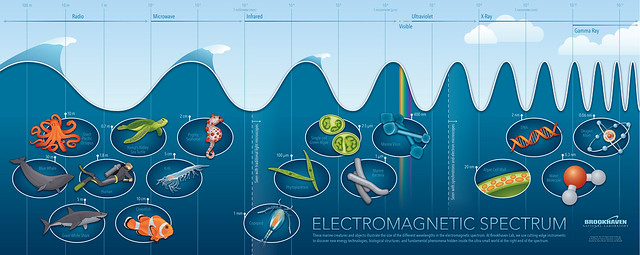
EM spectrum.svg
Creative Commons-licens Link

Medical Imaging

Ionizing Radiation

  • Interventional radiology
  • Diagnostic radiology
  • Nuclear Medicine
  • Radiation treatment

Non-Ionizing Radiation

  • MR
  • Ultrasound

Itchy feeling when working with X-rays

  • Probably extra radiosensitive, avoid working with X-rays
  • Please, use double aprons (strålskyddsförkläde)
  • Not possible to perceive ionizing radiation
Electromagnetic Spectrum
Creative Commons-licensCreative Commons-licensCreative Commons-licensBrookhaven National Laboratory

Distance, time & shielding!

New hybrid X-ray equipment

  • Time for first patient
  • What is missing in the image…?

Unnecessary irradiation of staff

Hybrid operating theatre gemelli rome.jpg
Creative Commons-licensCreative Commons-licensCreative Commons-licensPfree2014

Remember mobile shields...!

  • Physician and nurse at intensive care patient
  • Patient beds close to each other
  • Radiographer takes X-ray without shields…!

Unjustified irradiation of staff and adjacent pat

Blood test (1).jpg
Creative Commons-licensCreative Commons-licensCreative Commons-licensLinda Bartlett, National Cancer Institute

Shields at mobile X-ray systems

mobile_x_ray_system2

Exception: neonatal examinations

First come, first served...?

Först till kvarn får först mala…?

  • Lead aprons for everybody?
  • Mobile shields…?
  • Not enough lead glasses…!

Campo de Criptana Molinos de Viento 2.jpg
Creative Commons-licensCreative Commons-licensCreative Commons-licensLourdes Cardenal

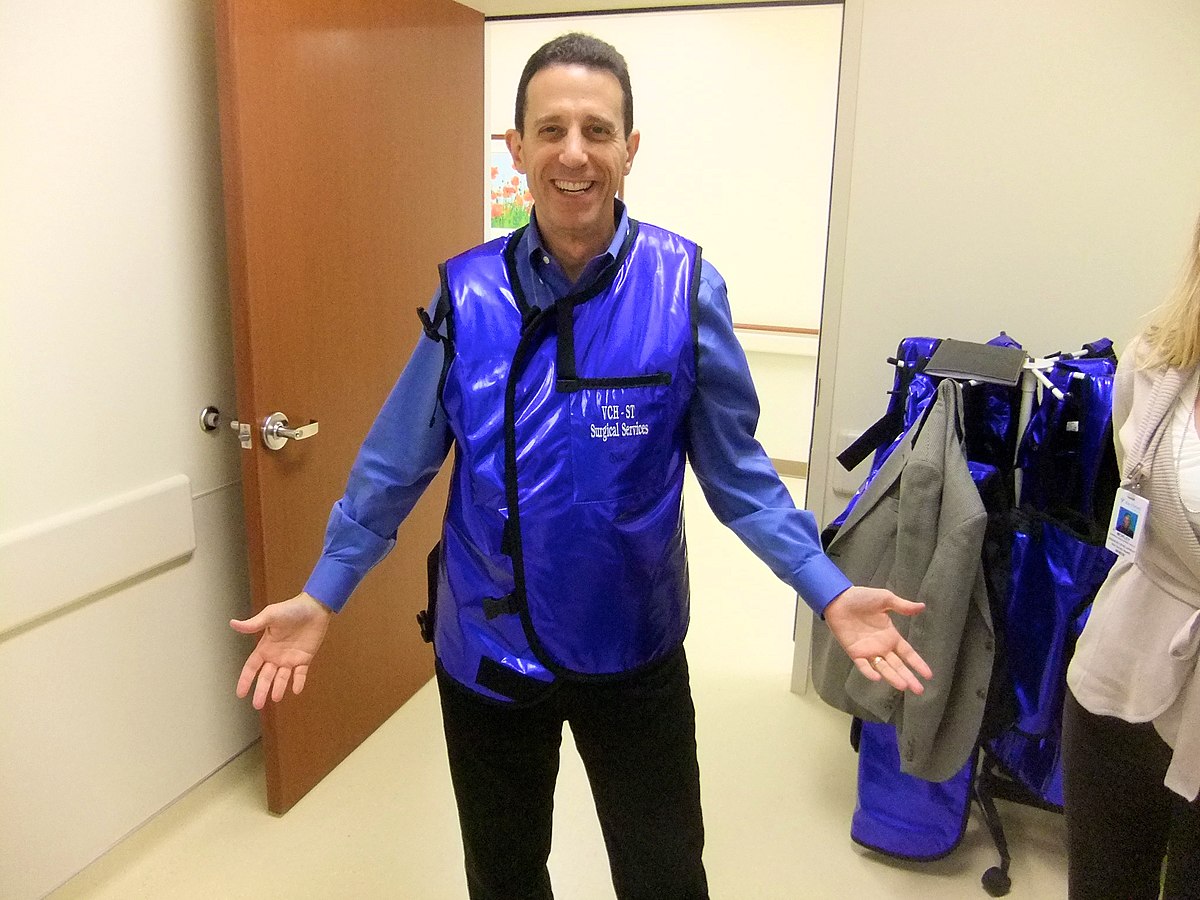
Adequate lead apron...?

  • No cracks…?
  • Lead equivalence (0.25/0.35/0.50 mm)…?
  • Covering…?
    Lead Apron worn by Dr Danny Sands.jpg
    Creative Commons-licensCreative Commons-licensCreative Commons-licensTed Eytan

Is the room empty...?

  • Anesthesia nurse prepares anesthetic equip
  • Radiographer no 1 prepares pat for CT
  • Radiografpher no 2 starts CT exam

Unjustified irradiation of staff, anesthesia nurse in room during CT overview image

Maquet Flow-I anesthesia machine.jpg
Creative Commons-licensCreative Commons-licensCreative Commons-licensDiverDave

CT scan protocol correct...?

  • Radiographer 1 forgets delay (50s) before CT exam
  • Radiographer 2 next to patient for IV injection
  • R 1 exposed without apron, but with dosimeter

Unnecessary irradiation of staff

dosimeter_positionDosimeter.png
Creative Commons-licensCreative Commons-licensCreative Commons-licens… (left), Public Domain (right)

Pregnant staff...?

  • Contact your medical physicist
  • Personal (monthly) dosimeter
  • Always right to avoid working with ionizing radiation

Avoid working close to patient at:

  • Angiography/interventional systems
  • Computed tomography systems
  • C-arms (large body)

Scattered radiation at C-arm

Scattered radiation at CT

Pregnant staff at MR...?

Back to Fairy town hospital...

  • X-ray grid (raster) breakes in afternoon
  • Engineer says delivery tomororrow
  • Radiographers are informed…
  • …but during night shift: grid is re-used…!

X-rays of three pat until radiologist complains about image quality…!

X-ray table
Creative Commons-licensCreative Commons-licensCreative Commons-licensBrokenSphere

X-ray licence necessary

  • Surgeon wants to save C-arm images
  • Presses left foot pedal
  • Left foot pedal = high dose

Unjustified irradiation of pat, education necessary

Sala de Cirurgia Hospital de Estância.jpg
Creative Commons-licensCreative Commons-licensCreative Commons-licensE-Sergipe

X-ray licence part II

  • Radiographer wants to CT scan additional 2 cm
  • Pushes the button “one more”
  • Med phys discover CT exam with 41 helical series

Unjustified irradiation of pat,
each keystroke = 0.5 mm scan with 20 mm collimation…!

CT-Scanner16SliceSystem
Creative Commons-licensCreative Commons-licensCreative Commons-licensSgt. Cecilio M. Ricardo Jr.

Fat inside or outside peritoneum (a.k.a. bukhinnan)...?

FatCT2008
Creative Commons-licensCreative Commons-licensCreative Commons-licensJames Heilman

Radiation shield…!

Mr BodyBuilder 2016...!?

Physically fit patient = malnourished patient…?
Asimomytis bodybuilding
Creative Commons-licensCreative Commons-licensCreative Commons-licensJudge Vag

Extremely tall or short patient...?

Collimation at CT...?

Less patient (and staff) dose!
CT_scan_lenght_vs_dose
Creative Commons-licensCreative Commons-licensCreative Commons-licensSofia Skyttner
i.e. adjusting scan lenght

Collimation at conventional X-ray...?

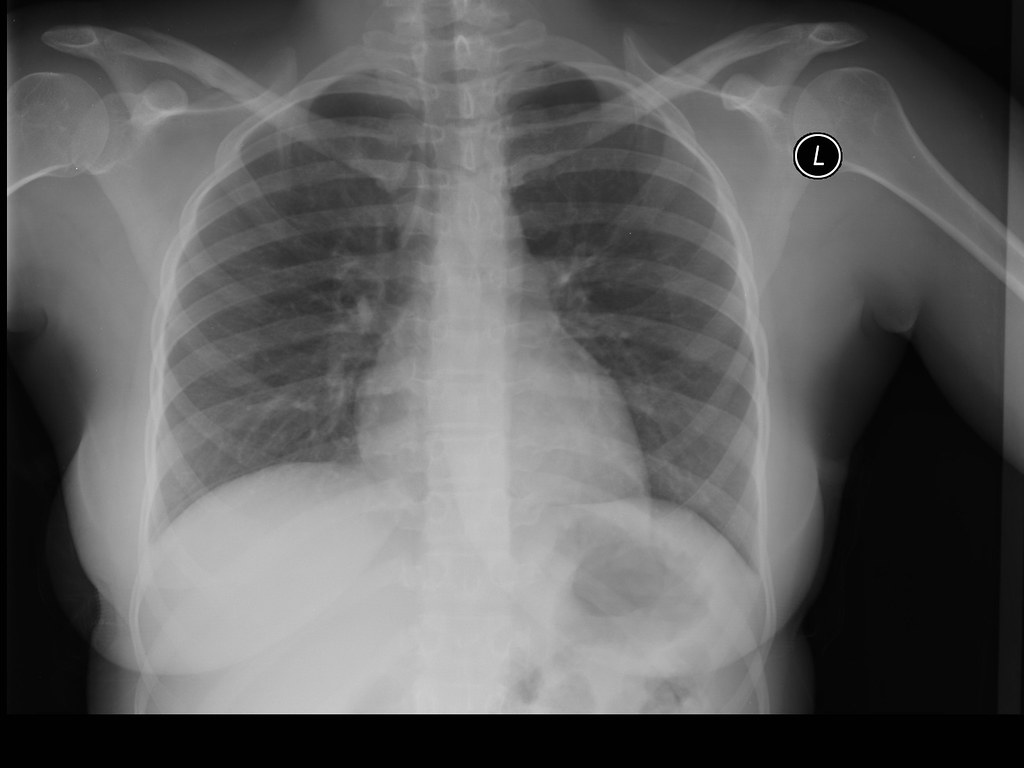
Improved image quality & less patient (and staff) dose!
Normal PA chest x-ray
Creative Commons-licensCreative Commons-licensCreative Commons-licensYale Rosen
i.e. adjusting X-ray beam length and width (inbländning)

Patient with stiff neck...?

Patient too low in gantry opening...?

low_centered_CT_thorax

  • Worsening image quality (photon starvation artifact)
  • Increased dose to skin-deep frontal organs

Arms down...? Hands up!

image_artifactshands up cat
Creative Commons-licensCreative Commons-licensCreative Commons-licens… (left), hajime yoneya (right)

Worse image quality (patient out of field artifact)

Unruly patient...? Fixate!

CT_motion_artifactsMummy at British Museum.jpg
Creative Commons-licensCreative Commons-licensCreative Commons-licens… (left), Klafubra (right)

Shadows and streaks (movement artifacts)

Jewelry in scanning area..?

  • Pat with cervical spine collar hiding necklace and earrings
  • Pat has zippers in sweatshirt, and carries errings

Citation

“Pat face and ears are full of piercing…!”

Elaine Davidson Front.jpg
Creative Commons-licensCreative Commons-licensCreative Commons-licensGeorge Gastin

Patient with dental filling/hip implant...?

Hip replacement Image 3684-PHCT_hip_metal_artifact
Creative Commons-licensCreative Commons-licensCreative Commons-licensNIH (left), Radiopedia (right)
Dark and light streaks, increased noise (metal artifacts)

Tattooed patient...?

Vendor QA of the CT...?

  • Radiographer finds dose levels high
  • R contacts medphys
  • Vendor has changed CT protocols…!

Unnecessary irradiation of pat during couple of days

Ct-internals.jpg
Creative Commons-licensCreative Commons-licensCreative Commons-licensChumpusRex

Physicist measurements...?

  • Medphys tests the AEC of a CT system
  • Medphys forgets to restore the CT afterwards
  • Nobody notices this…
  • …but medphys when returning a couple of weeks later

Unnecessary irradiation of about 100 pat

École de Physique des Houches (Les Houches Physics School) main lecture hall 1972.jpg
Creative Commons-licensCreative Commons-licensCreative Commons-licensA. T. Service

Carousel of communication...?

  • Radiographer asks for pat to drink 1.5 l water
  • Emergency nurse forgets to tell intensive care nurse
  • Intensive care nurse forgets to ask radiographer

Not optimized examination of pat, X-ray taken with bad image quality

Sanatorium Nursing- Everyday Life at Broomfield Sanatorium, Chelmsford, Essex, England, 1945 D24435.jpg
Creative Commons-licensCreative Commons-licensCreative Commons-licensImperial War Museums

Right patient...?

  • Ward nurse delivers pat for CT exam
  • Chatty staff, “messy”, only forename
  • “Is this Amelie?”, “Yes, this is Anneli”
  • CT -/+ ivk exam started, already contrast in kidneys…!

Unjustified irradiation of pat

All ok with da brain... for now.
Creative Commons-licensCreative Commons-licensCreative Commons-licensJuhan Sonin

Right name! Right ID no...?

  • Ward delivers pat for CT exam
  • Radiographer asks “Is this Frans?”
  • Ward nurse + pat answ “Yes”
  • Radiographer asks for ID no, pat answ with birth year

Unjustified irradiation of pat.
Physician noticed wrong pat being examined.

US Navy 030819-N-9593R-125 Hospital Corpsman 2nd Class Roy Puerto, right, of Olangapo City, Philippines, demonstrates the operation of the CT Scan machine
Creative Commons-licensCreative Commons-licensCreative Commons-licensUnited States Navy, Seth Rossman

Pat "ordered" och "delivered"!

  • Radiographer calls for supplementary X-ray
  • Transport service pick up pat from ward
  • Transport deliver pat with one word “supplementary”
  • Radiographer takes X-ray without asking for name and ID no

Unjustified irradiation of pat that had took over ward room, ID bracelet necessary!

Isle of Wight Festival 2007 wristband.JPG
Creative Commons-licensCreative Commons-licensCreative Commons-licensEditor5807

Right ID bracelet! Right patient...?

  • Pat from emergency room to X-ray room
  • Radiographer scans ID bracelet without asking for name & ID no
  • Radiographer takes one X-ray, pat protests: not left hand, right…!

Unnecessary irradiation of pat, pat has wrong ID bracelet

01 16 X-ray of Hand
Creative Commons-licensCreative Commons-licensCreative Commons-licensOpenStax

Radiation related accidents/unintentional exposures

Electronic management!

Check box: Radiation related accident
Check box: X-ray

Avoid blaiming the messanger!

  • Radiographer's dosimeter shows increased staff dose
  • Chech routine: radiographer always behind shield
  • Medphys measures lead equivalence: ordinary glass…!
  • Cleaning staff asked her husband for help regarding glass breakage…!

Unjustified irradiation of staff

Radiation safety handbook

Thank you!