Neural sensitivity to eudaimonic & hedonic rewards differentially predict adolescent depressive symptoms over time
Samantha Rhoads on Adriana Galván
1 November 2017
Intro to Eudaim/hed(onic) Rewards
Hedonia can hurt humans while eudaimonia can encourage excellence.
Historically: Aristotle promoted eudaimonia over hedonia
Hedonic Rewards (humans gravitate here): pleasure seeking
- desire, personal extrinsic gains, self-focused
- food, sex, TV, music
Eudaimonic Rewards: prosocial rewards
- charity, generosity
- meaning & purpose

Intro: Adolescence & Rewards
- Galván: we don't know about rewards & adolescence!
- Adolescence is a time of flux
- more vulnerability
- Propensity for risk-taking
- sometimes adaptive - social relationships
- sometimes detrimental - drugs
- Brevity of research on eudaim/hed(onic) rewards during adolescence
- reward processing & implications on well-being
- what might be beneficial?
- Depressive symptoms rise in adolescence

Deeper into Adolescence & Eudaim/hed(onic) Rewards
- Hedonic rewards: salient in adolescence
- impulsivity
- Ventral Striatum is active during reward-processing
- Reward processing, dopaminergic dysregulation, risk, & disorders
- vulnerability when unstable encoding of rewards
- SO response to rewards impacts well-being

Ventral Striatum & Rewards
- Reward processing associated with the ventral striatum (VS) activation
- VS & “liking”
- Can be measured independently of participants' consciousness
- Heightened VS activity during:
- hedonic rewards?
- eudaimonic rewards?

Intro: Overall Study Design
- longitudinal!
- 2 timepoints: changes in depressive symptoms
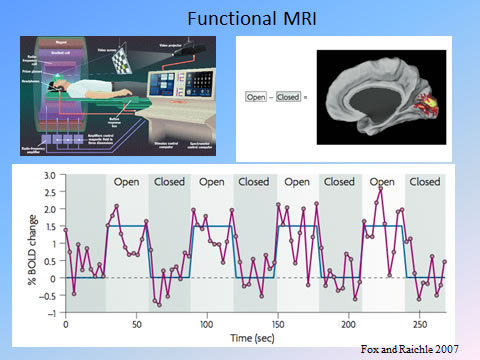
- fMRI ROI analysis of VS activation during rewards/risk-taking tasks
- Task 1: eudaimonic vs. hedonic

- Task 2: risky hedonic decisions for reward

- Task 1: eudaimonic vs. hedonic
Methods: Sample & Timepoints
- T1: 47 adolescents (15-17 y/o)
- Task 1 & 2 –> fMRI
- Depressive symptoms
- T2: 39 adolescents
- Depressive symptoms
Methods: Breakdown of Measures/Tasks
- Self-report questionnaire about depressive symptoms
- fMRI paradigms
- Task 1: Family Donation Task
- CD…
YOU + $$, FAM = ±0(40 trials) - PR…
YOU - $$, FAM + $$(24 trials) - Control…
Random/Practice(24 trials) - Task 2: Risk-Taking Task
- BART: pump balloon –> more $$ –> risk explosion (no payout)
- total game earnings in cash
Results: Depressive Variability
- T2 controlling or T1: change in depression
- variability in change: some increase, some decrease
T1 depression ≠ T2 depression(ns)- T2 depression ~ T1 depression (sig)
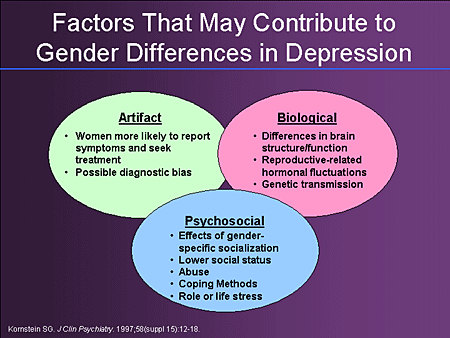
T1 depression ~ Gender(ns)- Sex difference in depressive changes
- Females: increase (ms)
- Males: decrease (ms)
- Conclusion: Control for gender in analyses!
Results: VS Activation: Eudaimonic Rewards & Depression
T1, VS, depression(ns)- T2 Depression ~ VS activation + T1 Depression (sig)
- Ps: High CD –> BIGGEST longitudinal decrease in depression (relative to PR)
- High CD + High VS = reduced depression (sig)
- High PR + High VS = increased depression (sig)

Results: VS Activation: Hedonic Rewards & Depression
T1, VS, depression(ns)risky VS ~ depression(sig)
Results: VS Activation: Depression ~ Eudaimonic & Hedonic Rewards Independently
CD VS ~ risky VS(ns)CD VS ~ PR VS(ns)PR VS ~ risky VS(sig)
risky VS ~ depression(sig)
- all conditions VS ~ T2 depression + T1 depression
- depression change (controlling for T1)
- VS to eudaim/hed(onic) rewards explain 58% variance in T2 depression
- sex on 1%
Discussion
Discussion: Limitations
- Small sample
- attrition
- Ps chose < 7 trials: excluded
- Lab setting
- Narrow age-range
- No PC, CR analyses included

Discussion: Future Research?
- Well-being might depend on higher values: family, morality, culture
- What next? Providing opportunities for adolescents to cultivate eudaimonic feelings
- Different types of rewards might mean different outcomes: neural responses might be risk factors & protective factors at the same time
- Motivational systems should be assessed


