Cycling and Society Conference, 2016-09-29, Lancaster, UK.

Structure of the talk

  • The origins of transport modelling
  • Transport models vs cycling
  • An open source approach

Tools for the trade

Premises

  • We live in a car dominated system
  • Transport models are leverage points in the transport system
  • 'Systemic' change is a long process and involves institutional change (Beddoe et al. 2009)
  • Leverage points such as models can speed-up the transition
  • Software for transport models is more accessible than ever

Institutional structures I: Board

Source: Department for Transport

Institutional structures II: Roads Traffic and Local Group

Institutional structures III: Local Transport

Institutional structures

A root cause of the 'problem'

The origins of transport modelling

Inspiration for this section

Forecasting urban travel

  • Book by Boyce and Williams (2015)

Origins of Transport planning

Credit: Crispin Cooper. See cardiff.ac.uk/sdna/

The origins of modelling

  • "urban travel forecasting was definitely 'where the action was' for young transportation engineers and planners entering the field in the 1960s" (Boyce and Williams 2015, 67).
  • heavily restricted by computing power
  • no consideration of walking or cycling

Transport models vs cycling

Transport planning tools: expensive…

And potentially dangerous!

Tools for transport planning I

Source: Pixton.com

  • Are black boxes

Tools for transport planning II

Source: openclipart

  • Tools are blunt

Tools for transport planning III

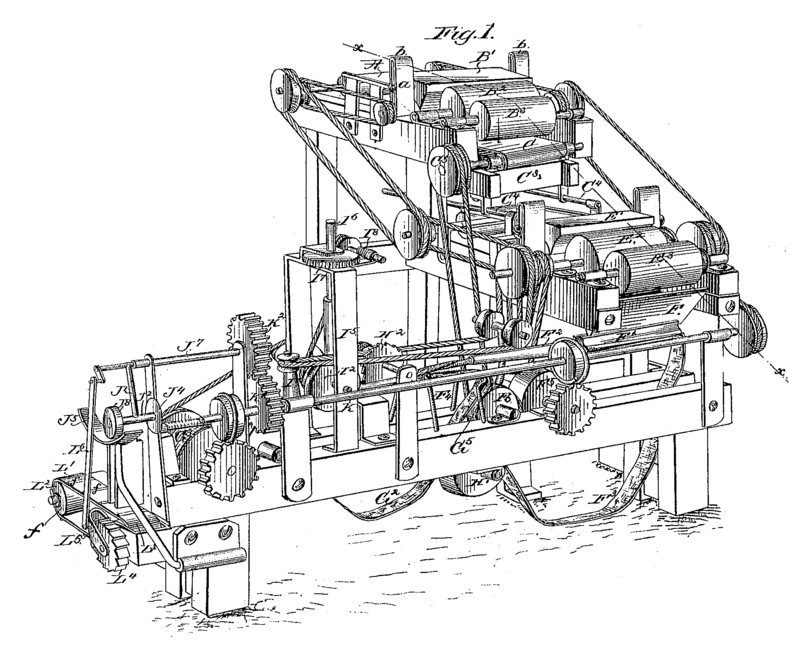
Source: By James Albert Bonsack (1859 – 1924), Wikimedia

  • Are sometimes too complex!
  • Implications for others

An open source approach

Open source in other sectors

  • We can learn from 'early adopter' sectors

Community buy-in

Testing many tools

Source: Camcycle.org

Participatory planning

Envisioning shifting travel patterns

Source: Leeds Cycling Campaign

Incorporation of new digital technologies

Transport planning is somthing you do

Source: Lovelace et al. (2016)

Summary table

Keep Replace How
Terminology Inaccessible Online tools
Equations Proprietary ownership Open source licences
Use of scenarios Ageing software New software
Narrow scenarios of future Flexible models
Black boxes Simple and open method

Get tooled up

  • Learn to speak 'their' language
  • Make use of web technologies: Google Maps, CycleStreets.net, CycleScape etc.
  • The Propensity to Cycle Tool is an open source, online and accessible model
  • Engage with transport models

References

Lovelace, Robin. 2016. "Mapping out the future of cycling." Get Britain Cycling, 2016. P. 22 - 24. Available from getbritaincycling.net

Beddoe, Rachael, Robert Costanza, Joshua Farley, Eric Garza, Jennifer Kent, Ida Kubiszewski, Luz Martinez, et al. 2009. “Overcoming Systemic Roadblocks to Sustainability: The Evolutionary Redesign of Worldviews, Institutions, and Technologies.” Proceedings of the National Academy of Sciences 106 (8): 2483–9. doi:10.1073/pnas.0812570106.

Boyce, David E., and Huw C. W. L. Williams. 2015. Forecasting Urban Travel: Past, Present and Future. Edward Elgar Publishing.

Lovelace, Robin, Anna Goodman, Rachel Aldred, Nikolai Berkoff, Ali Abbas, and James Woodcock. 2016. “The Propensity to Cycle Tool: An Open Source Online System for Sustainable Transport Planning.” ArXiv:1509.04425 [Cs]. http://arxiv.org/abs/1509.04425.