Cycling and Society Conference, 2016-09-29, Lancaster, UK.

Structure of the talk

  • The origins of transport modelling
  • Comments on transport models and transport modelling
  • An open source approach

Premises

  • We live in a car dominated system
  • Transport models are leverage points in the transport system
  • 'Systemic' change is a long process and involves institutional change
  • Focussing on leverage points such as models can speed-up the transition

Institutional structures

A root cause of the 'problem'

The origins of transport modelling

Inspiration for this section

Forecasting urban travel

  • Book by Boyce and Williams (2015)

Origins of Transport planning

Credit: Crispin Cooper

The origins of modelling

  • "urban travel forecasting was definitely 'where the action was' for young transportation engineers and planners entering the field in the 1960s" (Boyce and Williams 2015, 67).
  • heavily restricted by computing power
  • no consideration of walking or cycling

What's wrong with transport models

Transport planning tools: expensive…

And potentially dangerous!

Tools for transport planning I

Source: Pixton.com

  • Are black boxes

Tools for transport planning II

Source: openclipart

  • Tools are blunt

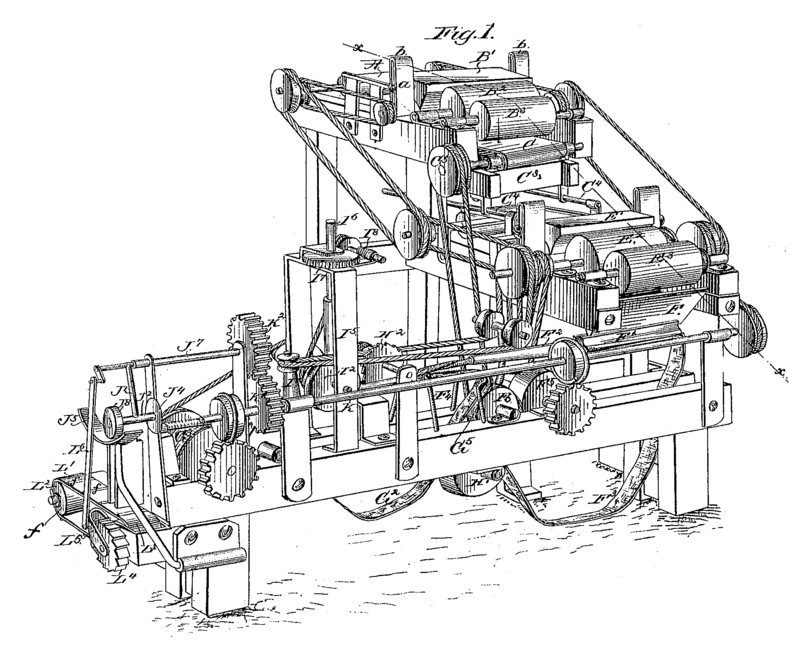
Tools for transport planning III

Source: By James Albert Bonsack (1859 – 1924), Wikimedia

  • Are sometimes too complex!
  • Implications for others

An open source approach

Open source in other sectors

  • We can learn from 'early adopter' sectors

Community buy-in

Testing many tools

Source: Camcycle.org

Participatory planning

Envisioning shifting travel patterns

Source: Leeds Cycling Campaign

Incorporation of new digital technologies

Transport planning is somthing you do

Source: Lovelace et al. (2016)

Summary

  • Transport problems are multi-faceted so 'techno-fixes' are not enough
  • Transport models are close to the root of the problem
  • They were not developed to solve current transport problems
  • Open source software has flourished in other sectors
  • Open source software offers many benefits for transport planners, including:
    • Encourages community particupation
    • Reduces costs
    • Increases collaboration
  • How do we get there?

References

Lovelace, Robin. 2016. "Mapping out the future of cycling." Get Britain Cycling, 2016. P. 22 - 24. Available from getbritaincycling.net

Boyce, David E., and Huw C. W. L. Williams. 2015. Forecasting Urban Travel: Past, Present and Future. Edward Elgar Publishing.

Lovelace, Robin, Anna Goodman, Rachel Aldred, Nikolai Berkoff, Ali Abbas, and James Woodcock. 2016. “The Propensity to Cycle Tool: An Open Source Online System for Sustainable Transport Planning.” ArXiv:1509.04425 [Cs]. http://arxiv.org/abs/1509.04425.