- Demo of the tool and software for sustainable transport
- Propensity to Cycle Tool (PCT): design and development
- Uses of the PCT
- Future work
2016-05-04. Slides: rpubs.com/RobinLovelace
Presentation structure
Demo of the tool and software for sustainable transport
Live demo of the PCT
See http://pct.bike/

Software as tools

The wider context

for recumbents
I: Software
Transport planning tools: expensive…

And potentially dangerous!

Source: Who will save us from transport models (Hollander 2015)
See also work by Robert Bain
The solution
- New breed of software products

Why open source?
- The global transition away from fossil fuels is big business
- Many planners are scrambling to make their cities healthier and cleaner
- But if solutions cannot be controled and shared, how can they scale?
Which companies are ready for a transition away from fossil fuels:
Tools of the trade: general to specific

General tools
- QGIS
- GRASS
- R
- Python
R's spatial ecosystem

http://www.maths.lancs.ac.uk/~rowlings/Teaching/UseR2012/introduction2Talk.html
QGIS

New software: aequilibrae

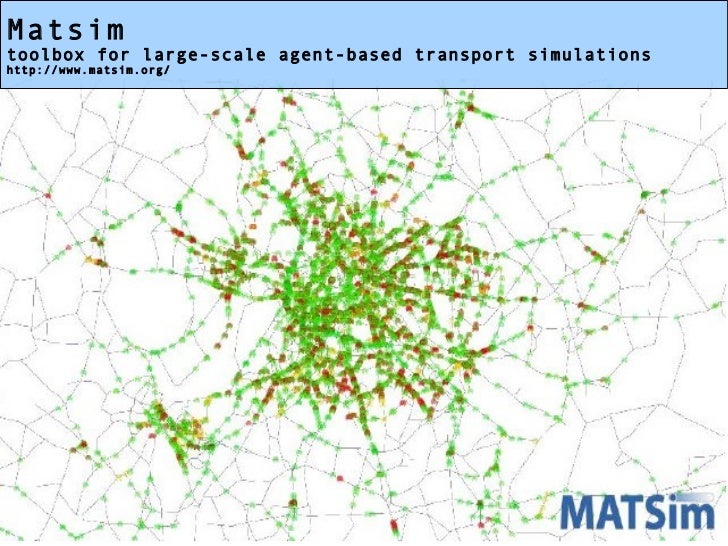
MATSim
SUMO

http://www.dlr.de/ts/en/desktopdefault.aspx/tabid-9883/16931_read-41000/
Why R?
See the free, open source, online tutorial github.com/robinlovelace/Creating-maps-in-R.

The packages used
Can be installed and loaded in 6 lines of code:
pkgs <- c("devtools", "shiny", "rgdal", "rgeos", "ggmap") # official packages
install.packages(pkgs)
library(devtools) # enables installation of leaflet
gh_pkgs <- c("rstudio/leaflet", "robinlovelace/stplanr")
install_github(gh_pkgs) # install packages on github
lapply(c(pkgs, "leaflet", "stplanr"), library, character.only = T) # load all
RStudio
RStudio Desktop is highly recommended for Shiny development.

Shiny
shiny is a framework for creating online interactive data visualisation 'apps'.
- A framework for making R output interactive
- An 'app' development framework
- A (small) growing community of developers centred around RStudio
- A way to structure online tools: separation of GUI and server via
server.Randui.Rfiles.
II: The Propensity to Cycle Tool (PCT): context, design and features
Policy context
- House of Commons Criticising the DfT for using closed models
- 'Impact' and 'engagement' increasingly important for research funding
- Complex data cannot be adequately summarised in a single static graphic
- Phase I: proof of concept (February - August 2015)
- Phase II: nationwide deployment (November 2015 - March 2017)
- National launch: July 2016
Modelling context

Context: Campaign for Better Transport
Interactive online tools
- AURIN
- Leeds-Bradford cycle path interactive map
- DECC's 'Energy 2050' planning tool
- Walkability index site
- Interactive download of bicycle paths
Design criteria
- Interactive basemap
- Points, lines and polygons
- Cascading effects of different scenarios > - Tidy!

Early user testing

The underlying theory
- Model works at the 'desire line' (or orgin-destination) level
- Uses 'distance decay' + hilliness to estimate which existing trips could be cycled
- Other factors (e.g. demographics, route network characteristics) could be added
- Local impacts of meeting national targets
- Any model could be used to create scenarios of the future - e.g. for local targets
- Check out our paper: http://arxiv.org/abs/1509.04425
Zoom-dependent selection and freeze Scope

Phase I (Feb - July 2016)
- Build and test a prototype model
- Identify 'desire lines' of greatest potential
- Make the tool scalable nationally
- Create a website that will make the Propensity to Cycle Tool a publicly accessible resource
Phase II (January 2016 - March 2017)
Version 1 - nationwide (V1 launch: June 2016)
- Route-allocated hilliness, network layer (complete)
- Include health outcomes (HEAT)
- National-level results (Anna Goodman)
- V1.5 - smaller (LSOA) zones (Jan 2017)
- Training
Version 2 - local deployment
- Include non-commute trips
- Compatibility with Local Authority trip demand models
- Micro-level analysis (V 2.2)
Additional work/spin outs
- Case studies of use (e.g. Manchester, Kent, Yorkshire)
- Method for identifying severance
- Case study along HS2 route
- 'Hackathons' to stimulate the tool's development
Interactive map of current flows

Route allocation

Route network analysis

Zoom to a specific area

III: Uses of the PCT
What kind of questions can it help answer?
- Where should we build for existing cyclists?
- New cyclists in the medium term?
- Long-term strategy?
- The question depends on the city
4 scenarios of change
- Government Target
- Gender Equality
- Go Dutch
- Ebikes
Scenario shift in desire lines

Scenario shift in network load I

Scenario shift in network load II

Example: Trinity Way, Manchester

Example: Where to build cycle paths in Leeds?

IV Future research ideas
Future development (near term)
Estimating cycling rate allocated to the road network with https://t.co/DuzyCQCA50. Looks like streams + rivers! pic.twitter.com/geaV0mVKdG
— Robin Lovelace (@robinlovelace) August 17, 2015
Potential futures: e.g. community contributed
- Custom scenarios (e.g. 20% cycling by 2020 in Bristol)
- Combining with route-network data, e.g. via link to sDNA
- Scenarios estimating impacts from specific interventions
- International comparisons of propensity to cycle
- A global propensity to cycle map?
How could transport infrastructure change if people worked from home?

How best to reallocate space away from cars?

How transport engineers can encourage car sharing?

Fork my code!

- The work is open source so can used as a foundation for further work by others
- E.g. councils with the technical know-how
- E.g. cycle campaigner 'hackers'
- Check out the project's repository: github.com/npct/pct-shiny
Links and references
R vs QGIS for transport planning: http://robinlovelace.net/r/2015/04/20/r-vs-qgis-for-transport.html
Aequillibrea: transport planning toolbox - http://www.aequilibrae.com/
Lovelace, R., Goodman, A., Aldred, R., Berkoff, N., Abbas, A., & Woodcock, J. (2015). The Propensity to Cycle Tool: An open source online system for sustainable transport planning. arXiv preprint arXiv:1509.04425.
Use Google and your imagination
Code is good but start with a pen and paper!
## [1] FALSE