Mini-Assignment 3: Exploratory Data Analysis on Bike Rental Businesses and Census Data in Atlanta
Helena Lindsay
2023-09-26
Step 1. Download the Census ACS 5-year estimate data for Census Tracts in Fulton and DeKalb counties, focusing on commuting.
FD_tract <- suppressMessages(
get_acs(geography = "tract", # or "block group", "county", "state" etc.
state = "GA",
county = c("Fulton", "Dekalb"),
variables = c(hhincome = 'B19019_001',
race.tot = "B02001_001",
race.white = "B02001_002",
race.black = "B02001_003",
trans.total = "B08006_001",
trans.car = "B08006_002",
trans.drovealone = "B08006_003",
trans.carpooled = "B08006_004",
trans.pubtrans = "B08006_008",
trans.bicycle = "B08006_014",
trans.walk = "B08006_015",
trans.WfH = "B08006_017",
med_housexp = "B25104_001",
med_realestate_taxes = "B25103_001"
),
year = 2019,
survey = "acs5", # American Community Survey 5-year estimate
geometry = TRUE, # returns sf objects
output = "wide") # wide vs. long
)Clean the variables
FD_tract <- FD_tract %>%
select(GEOID,
hhincome = hhincomeE, # New name = old name
race.tot = race.totE,
race.white = race.whiteE,
race.black = race.blackE,
trans.total = trans.totalE,
trans.car = trans.carE,
trans.drovealone = trans.drovealoneE,
trans.carpooled = trans.carpooledE,
trans.pubtrans = trans.pubtransE,
trans.bicycle = trans.bicycleE,
trans.walk = trans.walkE,
trans.WfH = trans.WfHE,
Med_HHExp = med_housexpE,
med_RETaxes = med_realestate_taxesE)tmap_mode("view")
## tmap mode set to interactive viewing
hhincome <- tm_shape(FD_tract) + tm_polygons("hhincome")
HH_exp <- tm_shape(FD_tract) + tm_polygons("Med_HHExp")
tmap_arrange(hhincome, HH_exp)Step 2. Download the City of Atlanta boundary and use it to filter the Census Tracts that either fall within or intersect with the City of Atlanta.
atlanta <- places('GA') %>%
filter(NAME == 'Atlanta')
tmap_mode("view")
tm_shape(atlanta) + tm_polygons("NAMELSAD")
epsg_id <- 4326
# Converting FD_tract into a sf object
FD_tract_sf <- FD_tract %>%
st_as_sf(coords=c("coordinates.longitude", "coordinates.latitude"), crs = epsg_id)
# Converting census tract data to an sf object
atl_sf <- atlanta %>% st_sf()
# Matching the CRS for the yelp and census tract data
st_crs(FD_tract_sf) <- st_crs(atl_sf) <- st_crs("EPSG:4326")
# Creating a subset based on census boundary
intersect <- FD_tract_sf[atl_sf %>%
st_union(), ,op = st_intersects]kable(head(intersect,5))| GEOID | hhincome | race.tot | race.white | race.black | trans.total | trans.car | trans.drovealone | trans.carpooled | trans.pubtrans | trans.bicycle | trans.walk | trans.WfH | Med_HHExp | med_RETaxes | geometry | |
|---|---|---|---|---|---|---|---|---|---|---|---|---|---|---|---|---|
| 1 | 13121001100 | 109426 | 5193 | 4060 | 299 | 3972 | 2482 | 2350 | 132 | 276 | 71 | 632 | 455 | 3432 | 3699 | MULTIPOLYGON (((-84.38782 3… |
| 2 | 13121009603 | 83243 | 4830 | 3561 | 749 | 3293 | 2786 | 2742 | 44 | 63 | 0 | 22 | 303 | 3071 | 4869 | MULTIPOLYGON (((-84.38738 3… |
| 3 | 13121005800 | 42679 | 1479 | 300 | 1057 | 736 | 398 | 341 | 57 | 271 | 12 | 43 | 12 | 576 | 493 | MULTIPOLYGON (((-84.41692 3… |
| 5 | 13121009502 | 86053 | 3867 | 2627 | 796 | 2087 | 1774 | 1593 | 181 | 17 | 0 | 62 | 161 | 2254 | 1993 | MULTIPOLYGON (((-84.39472 3… |
| 9 | 13121004900 | 84655 | 2835 | 1531 | 1106 | 1665 | 1097 | 1023 | 74 | 162 | 28 | 90 | 277 | 1108 | 2864 | MULTIPOLYGON (((-84.38779 3… |
tmap_mode("view")
tm_shape(intersect) + tm_polygons("GEOID")Step 3. Download Yelp data on categories = bikerentals for the City of Atlanta.
Function to get tract-wise radius
get_r <- function(poly, epsg_id){
#---------------------
# Takes: a single POLYGON or LINESTRTING
# Outputs: distance between the centroid of the boundingbox and a corner of the bounding box
#---------------------
# Get bounding box of a given polygon
bb <- st_bbox(poly)
# Get lat & long coordinates of any one corner of the bounding box.
bb_corner <- st_point(c(bb[1], bb[2])) %>% st_sfc(crs = epsg_id)
# Get centroid of the bb
bb_center_x <- (bb[3]+bb[1])/2
bb_center_y <- (bb[4]+bb[2])/2
bb_center <- st_point(c(bb_center_x, bb_center_y)) %>% st_sfc(crs = epsg_id) %>% st_sf()
# Get the distance between bb_p and c
r <- st_distance(bb_corner, bb_center)
# Multiply 1.1 to make the circle a bit larger than the Census Tract.
# See the Yelp explanation of their radius parameter to see why we do this.
bb_center$radius <- r*1.2
return(bb_center)
}Apply the above function to each Census Tract
# We use a functional (sapply) to apply this custom function to each Census Tract.
epsg_id <- 4326
r4all_apply <- intersect %>%
st_geometry() %>%
st_transform(crs = epsg_id) %>%
lapply(., function(x) get_r(x, epsg_id = epsg_id))
r4all_apply <- bind_rows(r4all_apply)ready_4_yelp <- r4all_apply %>%
mutate(x = st_coordinates(.)[,1],
y = st_coordinates(.)[,2])Visualize the buffers
ready_4_yelp %>%
# Draw a buffer centered at the centroid of Tract polygons.
# Radius of the buffer is the radius we just calculated using loop
st_buffer(., dist = .$radius) %>%
# Display this buffer in red
tm_shape(.) + tm_polygons(alpha = 0.3, col = 'red') +
# Display the original polygon in blue
tm_shape(intersect) + tm_borders(col= 'blue')Function to get the yelp data through the yelp API
# FUNCTION
get_yelp <- function(tract, category){
# ----------------------------------
# Gets one row of tract information (1,) and category name (str),
# Outputs a list of business data.frame
Sys.sleep(1)
n <- 1
# First request --------------------------------------------------------------
resp <- business_search(api_key = Sys.getenv("yelp_api"),
categories = "bikerentals",
latitude = tract$y,
longitude = tract$x,
offset = (1 - 1) * 50, # = 0 when n = 1
radius = round(tract$radius),
limit = 50)
# Calculate how many requests are needed in total
required_n <- ceiling(as.numeric(resp$total)/50)
# out is where the results will be appended to.
out <- vector("list", required_n)
# Store the business information to nth slot in out
out[[n]] <- resp$businesses
# Change the name of the elements to the total required_n
# This is to know if there are more than 1000 businesses,
# we know how many.
names(out)[n] <- required_n
# Throw error if more than 1000
if (as.numeric(resp$total) >= 1000)
{
# glue formats string by inserting {n} with what's currently stored in object n.
print(glue::glue("{n}th row has >= 1000 businesses."))
# Stop before going into the loop because we need to
# break down Census Tract to something smaller.
return(out)
}
else
{
# add 1 to n
n <- n + 1
# Now we know required_n -----------------------------------------------------
# Starting a loop
while(n <= required_n){
resp <- business_search(api_key = Sys.getenv("yelp_api"),
categories = category,
latitude = tract$y,
longitude = tract$x,
offset = (n - 1) * 50,
radius = round(tract$radius),
limit = 50)
out[[n]] <- resp$businesses
n <- n + 1
} #<< end of while loop
# Merge all elements in the list into a single data frame
out <- out %>% bind_rows()
return(out)
}
}Apply the get_yelp function to retrieve business data for each category (bikerentals)
# Prepare a collector
yelp_all_list <- vector("list", length = nrow(ready_4_yelp))
# Looping through all Census Tracts
for (row in 1:nrow(ready_4_yelp)){
yelp_all_list[[row]] <- suppressMessages(get_yelp(ready_4_yelp[row,], "bikerentals"))
}Step 4. Clean the data and map it out
Collapse the lists into a data frames
# Collapsing the list into a data.frame
yelp_bikes <- yelp_all_list %>% bind_rows() %>% as_tibble()Remove duplicates and count the number of businesses in each category
yelp_no_duplicates <- yelp_bikes[!duplicated(yelp_bikes$name), ]
yelp_bikes_count <- nrow(yelp_no_duplicates)
print(paste("The number of businesses under the category 'bikerentals' in Atlanta is:", yelp_bikes_count))
save(yelp_no_duplicates, file = "/Users/helenalindsay/Documents/Fall_23/CP8883/yelp_bikes.RData")Flatten nested columns that have multiple variables in one column.
load("/Users/helenalindsay/Documents/Fall_23/CP8883/yelp_bikes.RData")
concate_list <- function(x){
# x is a data frame with columns "alias" and "title" from Yelp$categories
# returns a character vector containing category concatenated titles
titles <- x[["title"]] %>% str_c(collapse = ", ")
return(titles)
}
yelp_flat <- yelp_no_duplicates %>%
# 1. Flattening columns with data frame
jsonlite::flatten() %>%
# 2. Handling list-columns
mutate(transactions = transactions %>%
map_chr(., function(x) str_c(x, collapse=", ")),
location.display_address = location.display_address %>%
map_chr(., function(x) str_c(x, collapse=", ")),
categories = categories %>% map_chr(concate_list)) Delete rows that have missing data in coordinates variable. It’s okay to have NAs in other variables.
yelp_dropna <- yelp_flat %>%
drop_na(coordinates.longitude)%>%
drop_na(coordinates.latitude)Extract coordinates for each business and filter by the City of Atlanta boundary
# Extract coordinates
yelp_sf <- yelp_no_duplicates %>%
mutate(x = .$coordinates$longitude,
y = .$coordinates$latitude) %>%
filter(!is.na(x) & !is.na(y)) %>%
st_as_sf(coords = c("x", "y"), crs = epsg_id)
yelp_sf <- yelp_sf[yelp_sf %>%
filter(yelp_sf$location$city %in% c("Atlanta")) %>%
st_union(), ,op = st_intersects]kable(head(yelp_sf))| id | alias | name | image_url | is_closed | url | review_count | categories | rating | coordinates | transactions | location | phone | display_phone | distance | price | geometry |
|---|---|---|---|---|---|---|---|---|---|---|---|---|---|---|---|---|
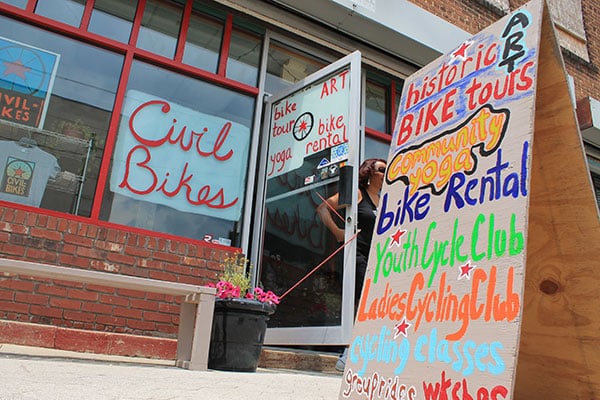
| JkkHRgYj0mvdgbMXFm436w | civil-bikes-atlanta | Civil Bikes | https://s3-media4.fl.yelpcdn.com/bphoto/JqTLT-chrqtbyuoB-52gdw/o.jpg | FALSE | https://www.yelp.com/biz/civil-bikes-atlanta?adjust_creative=2fwKSTvgAQf6j-1QQXYBxw&utm_campaign=yelp_api_v3&utm_medium=api_v3_business_search&utm_source=2fwKSTvgAQf6j-1QQXYBxw | 11 | bikerentals , historicaltours , Bike Rentals , Historical Tours | 4.5 | 33.74468 | NULL | +14043238754 | (404) 323-8754 | 366.1830 | NA | POINT (-84.37784 33.74468) | |
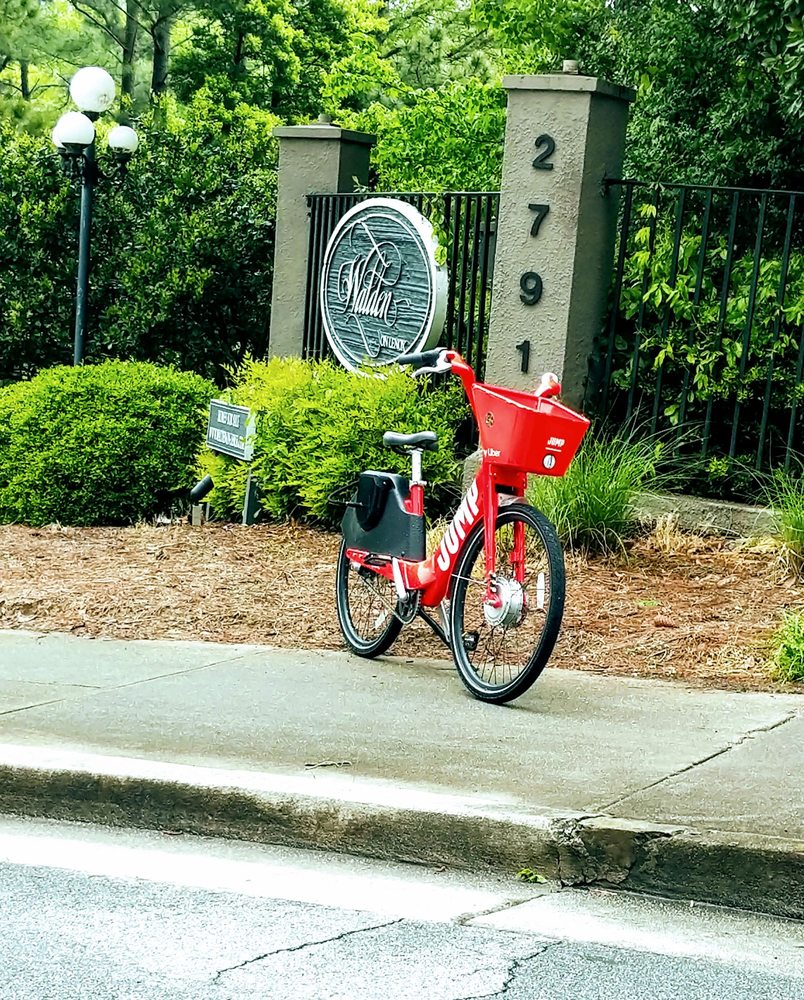
| UmftRC3h0h_owHEm5ZLp7Q | jump-atlanta-2 | JUMP | https://s3-media2.fl.yelpcdn.com/bphoto/D87H00XdLWZJS-LvQkTalA/o.jpg | FALSE | https://www.yelp.com/biz/jump-atlanta-2?adjust_creative=2fwKSTvgAQf6j-1QQXYBxw&utm_campaign=yelp_api_v3&utm_medium=api_v3_business_search&utm_source=2fwKSTvgAQf6j-1QQXYBxw | 1 | scooterrentals , bikerentals , Scooter Rentals, Bike Rentals | 1.0 | 33.74827 | NULL | +18333006106 | (833) 300-6106 | 1238.0773 | NA | POINT (-84.39146 33.74827) | |
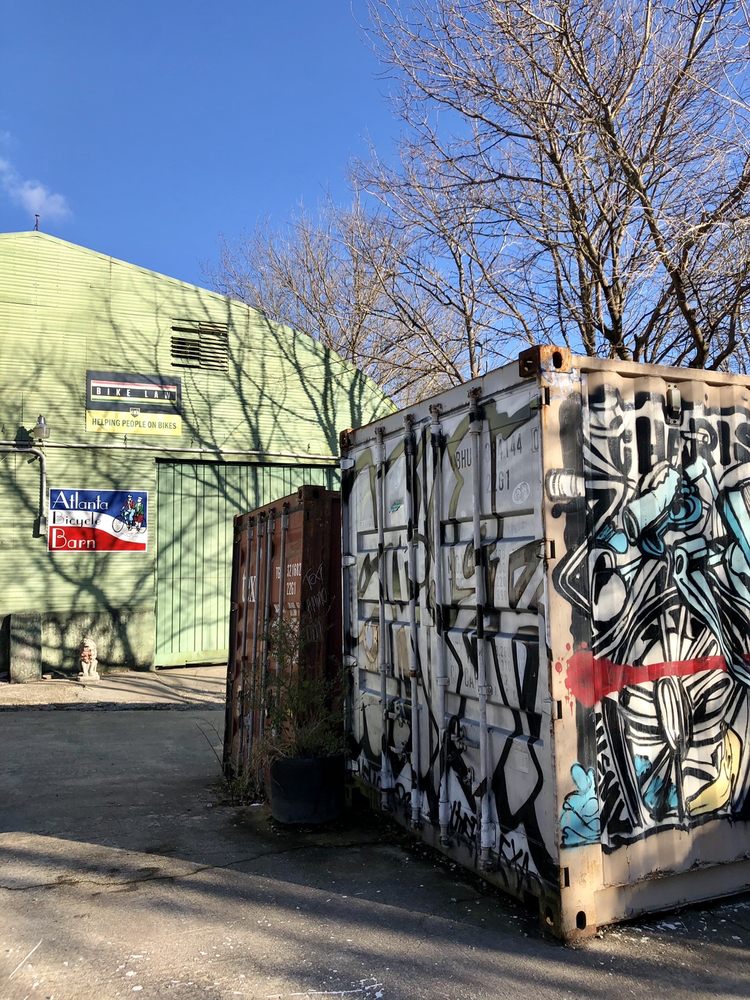
| b3nacMG8PR77GNCaI4RBKA | atlanta-bicycle-barn-atlanta | Atlanta Bicycle Barn | https://s3-media3.fl.yelpcdn.com/bphoto/Ik2pMce41_MRcg3svjTbSQ/o.jpg | FALSE | https://www.yelp.com/biz/atlanta-bicycle-barn-atlanta?adjust_creative=2fwKSTvgAQf6j-1QQXYBxw&utm_campaign=yelp_api_v3&utm_medium=api_v3_business_search&utm_source=2fwKSTvgAQf6j-1QQXYBxw | 128 | bikerentals , bike_repair_maintenance, bikes , Bike Rentals , Bike Repair/Maintenance, Bikes | 4.5 | 33.75833 | NULL | 151 Sampson St NE | +17708732413 | (770) 873-2413 | 1191.7885 | \[ |POINT (-84.36515 33.75833) | |tMNV5bj4rqud0cRRQiPbWA |outback-bikes-atlanta |Outback Bikes |https://s3-media4.fl.yelpcdn.com/bphoto/rnpOTcs3WwjTq1JsfV1b8w/o.jpg |FALSE |https://www.yelp.com/biz/outback-bikes-atlanta?adjust_creative=2fwKSTvgAQf6j-1QQXYBxw&utm_campaign=yelp_api_v3&utm_medium=api_v3_business_search&utm_source=2fwKSTvgAQf6j-1QQXYBxw | 103|bikes , bike_repair_maintenance, bikerentals , Bikes , Bike Repair/Maintenance, Bike Rentals | 4.0|33.76756 |NULL |484 Moreland Ave NE |+14046884878 |(404) 688-4878 | 675.3105|\] | POINT (-84.3495 33.76756) |
| rbf8bVY0cuqyGZtbn691lg | pedego-electric-bikes-atlanta-atlanta-2 | Pedego Electric Bikes Atlanta | https://s3-media2.fl.yelpcdn.com/bphoto/Z7KlxC0vcyoxOCSxbH3Rrg/o.jpg | FALSE | https://www.yelp.com/biz/pedego-electric-bikes-atlanta-atlanta-2?adjust_creative=2fwKSTvgAQf6j-1QQXYBxw&utm_campaign=yelp_api_v3&utm_medium=api_v3_business_search&utm_source=2fwKSTvgAQf6j-1QQXYBxw | 15 | bikes , bikerentals , bike_repair_maintenance, Bikes , Bike Rentals , Bike Repair/Maintenance | 4.5 | 33.74172 | NULL | 414 Bill Kennedy Way | +14049753915 | (404) 975-3915 | 1452.7682 | NA | POINT (-84.35797 33.74172) |
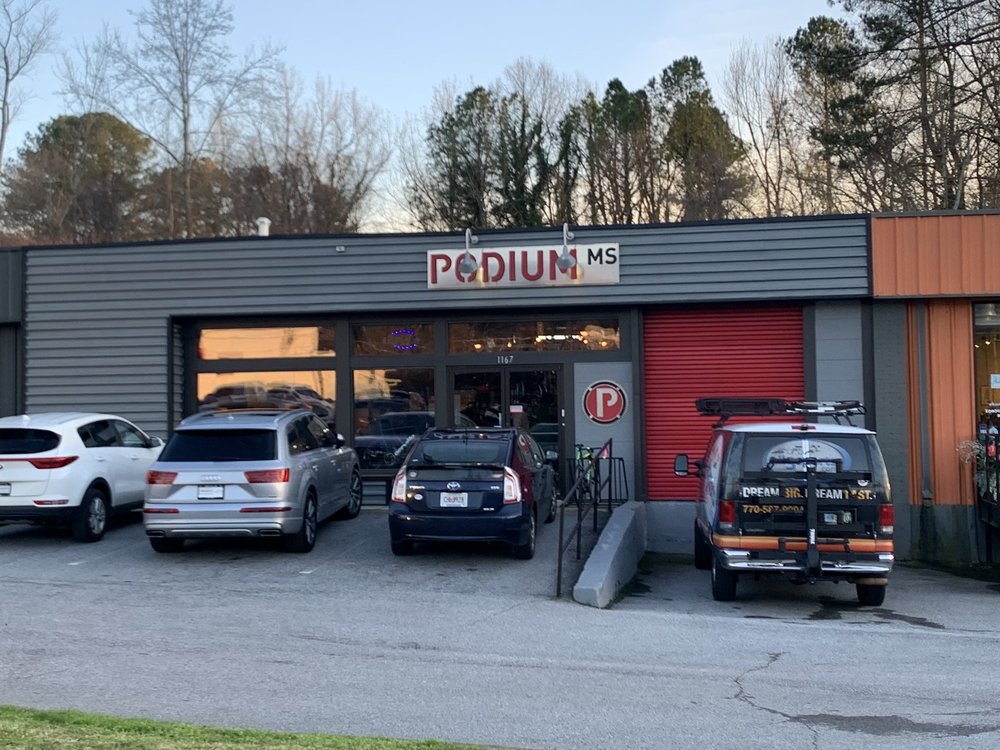
| BozJwfoXvoDEUj-sgr7WDg | podium-multisport-atlanta | Podium Multisport | https://s3-media1.fl.yelpcdn.com/bphoto/T78pUkBulcQ5osv4mVGTiQ/o.jpg | FALSE | https://www.yelp.com/biz/podium-multisport-atlanta?adjust_creative=2fwKSTvgAQf6j-1QQXYBxw&utm_campaign=yelp_api_v3&utm_medium=api_v3_business_search&utm_source=2fwKSTvgAQf6j-1QQXYBxw | 20 | bikes , bikerentals , Bikes , Bike Rentals | 4.5 | 33.80510 | NULL | 1167 Zonolite Pl NE | +14048923400 | (404) 892-3400 | 2221.7502 | $$$ | POINT (-84.34143 33.8051) |

tm_shape(intersect) + tm_borders() + tm_shape(yelp_sf) + tm_dots(col="rating",id="name",popup.vars=c( "review_count", "rating")) Step 5. Examine the associations among the variables
Appending Census data
bike_in_tract <- st_join(intersect, yelp_sf, join = st_intersects)
# Join tract geometry with the number of bike rentals in tract
test <- st_join(intersect, yelp_sf %>% mutate(count = 1))
out <- test %>%
group_by(GEOID) %>%
summarise(count = sum(count, na.rm = T))
# Check to see if the polygons and the poin data on bike rentals match
tm_shape(out) + tm_polygons(col = "count") + tm_shape(yelp_sf) + tm_dots()
## Join back the counts of bike rentals to the Tract data
FD_tract_Geom_bike <- intersect %>%
left_join(out %>% st_set_geometry(NULL), by = "GEOID")
FD_tract_Geom_bike$count <- as.factor(FD_tract_Geom_bike$count)Calculate the distance to the nearest bike rental business for each tract
distance <- as.data.frame(sf::st_distance(FD_tract_Geom_bike,yelp_sf))
distance$min_value <- pmin(distance$V1, distance$V2, distance$V3, distance$V4, distance$V5, distance$V6, distance$V7)
FD_tract_distance <- cbind(FD_tract_Geom_bike,distance$min_value)
FD_tract_distance <- FD_tract_distance %>%
rename(Distance_to_nearest_rental = distance.min_value)
breakpoints <- c(0,500,1000,2000,5000,10000,20000)
labels <- c("0", "500-1000", "1000-2000", "2000-5000","5000-10000", "10000-20000")
# Create a new column with the categories
FD_tract_distance$Categories <- cut(FD_tract_distance$Distance_to_nearest_rental, breaks = breakpoints, labels = labels, right = FALSE)Visualize the output
tm_shape(FD_tract_distance) + tm_polygons(col="Distance_to_nearest_rental",breaks = c(0,500,1000,2000,5000,10000,20000)) +tm_shape(yelp_sf) +tm_dots()# Checking the data for missing values
print(skim(FD_tract_distance))
# Dropping the missing values
bike_census_dropna1 <- FD_tract_distance[!is.na(FD_tract_distance$med_RETaxes),]
bike_census_dropna2 <- bike_census_dropna1[!is.na(bike_census_dropna1$hhincome),]
# Just to check whether the 8 NAs have been dropped from hhincome
print(skim(bike_census_dropna2))
# To check if it is still a sf file
class(bike_census_dropna2)Data exploration
plt <- boxplot(hhincome~Categories, data=bike_census_dropna2, main="Boxplot of Bike Rentals by Income", xlab="Distance from nearest bike rental (meters)", ylab="Household median income",cex.axis = 0.8)
The boxplot of bike rentals by income seems to show a slightly inverse correlation between higher income tracts and distance from bike rental businesses, implying that higher income tracts tend to be in closer proximity with a bike rental business.
boxplot(trans.bicycle~Categories, data=bike_census_dropna2, main="Boxplot of Bike Rentals by Number of Bike Commuters", xlab="Distance from nearest bike rental (meters)", ylab="Number of Bike Commuters",cex.axis = 0.8)
The boxplot of bike rentals by number of bike commuters seems to show a inverse correlation between tracts with higher number of bike commuters and distance from bike rental businesses, implying that tracts with higher number of bike commuters tend to be in closer proximity with a bike rental business.
boxplot(med_RETaxes~Categories, data=bike_census_dropna2, main="Boxplot of Bike Rentals by Median Real Estate Taxes", xlab="Distance from nearest bike rental (meters)", ylab="Median Real Estate Taxes",cex.axis = 0.8)
The boxplot of bike rentals by median real estate taxes seems to show a inverse correlation between tracts with higher median real estate taxes and distance from bike rental businesses, implying that tracts with higher median real estate taxes tend to be in closer proximity with a bike rental business.
Binary logistic regression
binary_bike1 <- glm(count~hhincome, family=binomial, data=bike_census_dropna2)
summary(binary_bike1)##
## Call:
## glm(formula = count ~ hhincome, family = binomial, data = bike_census_dropna2)
##
## Deviance Residuals:
## Min 1Q Median 3Q Max
## -0.3181 -0.3132 -0.3119 -0.3108 2.4723
##
## Coefficients:
## Estimate Std. Error z value Pr(>|z|)
## (Intercept) -3.015e+00 7.520e-01 -4.009 6.09e-05 ***
## hhincome 2.715e-07 9.065e-06 0.030 0.976
## ---
## Signif. codes: 0 '***' 0.001 '**' 0.01 '*' 0.05 '.' 0.1 ' ' 1
##
## (Dispersion parameter for binomial family taken to be 1)
##
## Null deviance: 56.285 on 146 degrees of freedom
## Residual deviance: 56.284 on 145 degrees of freedom
## AIC: 60.284
##
## Number of Fisher Scoring iterations: 5binary_bike2 <- glm(count~trans.bicycle, family=binomial, data=bike_census_dropna2)
summary(binary_bike2)##
## Call:
## glm(formula = count ~ trans.bicycle, family = binomial, data = bike_census_dropna2)
##
## Deviance Residuals:
## Min 1Q Median 3Q Max
## -0.3394 -0.3125 -0.3097 -0.3097 2.4745
##
## Coefficients:
## Estimate Std. Error z value Pr(>|z|)
## (Intercept) -3.0136283 0.4429701 -6.803 1.02e-11 ***
## trans.bicycle 0.0008377 0.0098037 0.085 0.932
## ---
## Signif. codes: 0 '***' 0.001 '**' 0.01 '*' 0.05 '.' 0.1 ' ' 1
##
## (Dispersion parameter for binomial family taken to be 1)
##
## Null deviance: 56.285 on 146 degrees of freedom
## Residual deviance: 56.277 on 145 degrees of freedom
## AIC: 60.277
##
## Number of Fisher Scoring iterations: 5binary_bike3 <- glm(count~med_RETaxes, family=binomial, data=bike_census_dropna2)
summary(binary_bike3)##
## Call:
## glm(formula = count ~ med_RETaxes, family = binomial, data = bike_census_dropna2)
##
## Deviance Residuals:
## Min 1Q Median 3Q Max
## -0.3356 -0.3175 -0.3082 -0.3043 2.4823
##
## Coefficients:
## Estimate Std. Error z value Pr(>|z|)
## (Intercept) -3.064e+00 5.947e-01 -5.152 2.58e-07 ***
## med_RETaxes 2.151e-05 1.398e-04 0.154 0.878
## ---
## Signif. codes: 0 '***' 0.001 '**' 0.01 '*' 0.05 '.' 0.1 ' ' 1
##
## (Dispersion parameter for binomial family taken to be 1)
##
## Null deviance: 56.285 on 146 degrees of freedom
## Residual deviance: 56.261 on 145 degrees of freedom
## AIC: 60.261
##
## Number of Fisher Scoring iterations: 5Linear regression
lm_bike1 <- lm(hhincome ~ Distance_to_nearest_rental , data=bike_census_dropna2)
summary(lm_bike1)##
## Call:
## lm(formula = hhincome ~ Distance_to_nearest_rental, data = bike_census_dropna2)
##
## Residuals:
## Min 1Q Median 3Q Max
## -56676 -36109 -7671 20899 141361
##
## Coefficients:
## Estimate Std. Error t value Pr(>|t|)
## (Intercept) 74037.855 5529.321 13.390 <2e-16 ***
## Distance_to_nearest_rental -0.839 1.060 -0.792 0.43
## ---
## Signif. codes: 0 '***' 0.001 '**' 0.01 '*' 0.05 '.' 0.1 ' ' 1
##
## Residual standard error: 42700 on 145 degrees of freedom
## Multiple R-squared: 0.004304, Adjusted R-squared: -0.002563
## F-statistic: 0.6268 on 1 and 145 DF, p-value: 0.4298lm_bike2 <- lm(trans.bicycle~Distance_to_nearest_rental, data=bike_census_dropna2)
summary(lm_bike2)##
## Call:
## lm(formula = trans.bicycle ~ Distance_to_nearest_rental, data = bike_census_dropna2)
##
## Residuals:
## Min 1Q Median 3Q Max
## -37.185 -20.483 -9.615 5.774 195.340
##
## Coefficients:
## Estimate Std. Error t value Pr(>|t|)
## (Intercept) 37.1850336 4.6255209 8.039 2.91e-13 ***
## Distance_to_nearest_rental -0.0040733 0.0008866 -4.595 9.35e-06 ***
## ---
## Signif. codes: 0 '***' 0.001 '**' 0.01 '*' 0.05 '.' 0.1 ' ' 1
##
## Residual standard error: 35.72 on 145 degrees of freedom
## Multiple R-squared: 0.1271, Adjusted R-squared: 0.1211
## F-statistic: 21.11 on 1 and 145 DF, p-value: 9.346e-06lm_bike3 <- lm(med_RETaxes~Distance_to_nearest_rental, data=bike_census_dropna2)
summary(lm_bike3)##
## Call:
## lm(formula = med_RETaxes ~ Distance_to_nearest_rental, data = bike_census_dropna2)
##
## Residuals:
## Min 1Q Median 3Q Max
## -3207.6 -2064.5 -696.4 1486.6 7306.0
##
## Coefficients:
## Estimate Std. Error t value Pr(>|t|)
## (Intercept) 3480.96730 349.07002 9.972 <2e-16 ***
## Distance_to_nearest_rental -0.09919 0.06690 -1.482 0.14
## ---
## Signif. codes: 0 '***' 0.001 '**' 0.01 '*' 0.05 '.' 0.1 ' ' 1
##
## Residual standard error: 2696 on 145 degrees of freedom
## Multiple R-squared: 0.01493, Adjusted R-squared: 0.008137
## F-statistic: 2.198 on 1 and 145 DF, p-value: 0.1404Correlation analysis
cor_bike1 <- cor(bike_census_dropna2$hhincome, bike_census_dropna2$Distance_to_nearest_rental)
cor_bike1## [1] -0.06560464cor_bike2 <- cor(bike_census_dropna2$trans.bicycle, bike_census_dropna2$Distance_to_nearest_rental)
cor_bike2## [1] -0.3564872cor_bike3 <- cor(bike_census_dropna2$med_RETaxes, bike_census_dropna2$Distance_to_nearest_rental)
cor_bike3## [1] -0.1221917Conclusion
From the binary logistic regression analysis, I found that median household income, number of bicycle commuters, nor median real estate taxes are statistically significantly related to the presence or absence of a bike rental business in the specific tract.
I then analyzed using linear regression the distance from the nearest bike rental business for each tract against the same variables; median household income, number of bicycle commuters, and median real estate taxes. I found that the number of bicycle commuters is statistically significantly related to the tract’s distance to the closest bike rental business with a p-value of 9.35e-06. The two other variables were not statistically significantly related to the dependent variable.
Finally, I examined the correlation coefficients between the three independent variables and the dependent variable. There is a weak negative correlation between median household income and distance from a bike rental business for each tract with a coefficient of -0.06560464. There is a moderate negative correlation between the number of bicycle commuters and distance from a bike rental business for each tract with a coefficient of -0.3564872. Lastly, there is a weak negative correlation between median real estate taxes and distance from a bike rental business for each tract with a coefficient of -0.1221917.
Overall, the analysis conducted in this project showed a glimpse of the spatial relationships between bike rental businesses and other socioeconomic variables. Although the scale of this analysis was small with only 7 data points for the dependent variable, I would be interested in exploring whether there could be a more significant finding when expanding the study area.